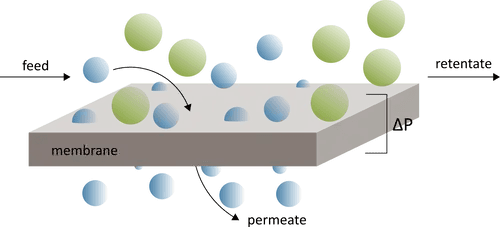
The four membrane filtration types differ primarily in pore size and contaminant removal capability. Microfiltration (MF) removes particles down to 0.1 microns, ultrafiltration (UF) filters down to 0.01 microns to capture viruses, nanofiltration (NF) removes divalent ions and organics at 0.001 microns, and reverse osmosis (RO) rejects nearly all dissolved solids below 0.001 microns. Each type operates at different pressures, costs, and energy requirements.
If you work in water treatment, understanding these four technologies isn't optional. They show up in system design conversations, capital planning meetings, regulatory compliance discussions, and on certification exams. And the decision of which membrane to deploy (or which combination) affects everything from your operating budget to your pathogen removal credits.
I wrote this comparison because I wanted a single reference I could come back to when evaluating membrane options for different treatment scenarios. Most of what's out there is either too basic or too focused on selling a specific product. This is meant to be the honest, practical guide I wish I'd had earlier in my career.
MF vs UF vs NF vs RO: The Complete Comparison Table
Before we dig into each type individually, here's the side-by-side comparison. This is the table you'll want to bookmark.
| Characteristic | MF | UF | NF | RO |
|---|---|---|---|---|
| Pore size | 0.1-0.45 µm | 0.01-0.1 µm | 0.001-0.01 µm | < 0.001 µm |
| Operating pressure | 1-30 psi | 10-50 psi | 50-150 psi | 150-600 psi |
| Removes bacteria | Yes | Yes | Yes | Yes |
| Removes viruses | No | Yes | Yes | Yes |
| Removes dissolved salts | No | No | Partial (divalent) | Yes (95-99%) |
| Removes PFAS | No | No | Yes (~99%) | Yes (~99%) |
| Recovery rate | 90-98% | 90-98% | 80-90% | 70-90% |
| Energy (kWh/m³) | 0.1-0.4 | 0.2-0.5 | 0.5-2 | 2-6 |
| Membrane lifespan | 5-10 years | 5-10 years | 3-7 years | 3-7 years |
| Capital cost | Lower | Lower-Mod | Mod-High | High |
| Typical application | Pre-treatment, turbidity | Pathogen removal, RO pre-treat | Hardness, organics | Desal, ultrapure |
The pattern is straightforward: as pore size gets smaller, you remove more, but you also pay more in pressure, energy, and capital cost. The art of membrane system design is matching the right technology to what you actually need to remove, without over-engineering (and over-spending).
When Should You Use Microfiltration?
Microfiltration is the coarsest membrane process, with pore sizes between 0.1 and 0.45 microns. It removes suspended solids, algae, protozoa like Cryptosporidium and Giardia, and bacteria, while allowing dissolved substances, viruses, and smaller particles to pass through.
MF is the workhorse for pre-treatment. If you're running an RO or NF system downstream, MF upstream protects those finer membranes from particulate fouling and extends their lifespan considerably. In seawater desalination plants, you'll almost always see MF or UF installed ahead of the RO stage for exactly this reason.
MF is also widely used for turbidity reduction in both drinking water and wastewater effluent polishing. It achieves greater than 4-log removal of protozoan pathogens, which is critical for meeting Surface Water Treatment Rule requirements.
Where MF falls short: It doesn't get regulatory credit for virus removal. The integrity tests used for MF systems (pressure decay tests) don't validate virus-sized particle rejection. If you need virus removal credits, you're looking at UF, or you're pairing MF with a disinfection step like chlorination or UV.
The bottom line on MF: Choose microfiltration when your primary goals are particulate and protozoa removal, turbidity reduction, or pre-treatment for a downstream membrane process, and when virus removal credit isn't required from the membrane itself. It's the lowest-cost, lowest-energy membrane option, and for many applications, it's all you need.
Choose microfiltration when your primary goals are particulate and protozoa removal, turbidity reduction, or pre-treatment for a downstream membrane process, and when virus removal credit isn't required from the membrane itself.
When Should You Use Ultrafiltration?
Ultrafiltration operates with pore sizes between 0.01 and 0.1 microns, roughly 10 times finer than MF. This smaller pore size means UF removes everything MF does, plus viruses and high-molecular-weight organic compounds.
UF has become the default choice for municipal drinking water treatment where pathogen barriers are critical. The ability to achieve greater than 4-log removal of both protozoa and viruses from a single barrier makes UF especially valuable for surface water systems. It's also the most common membrane technology used in Membrane Bioreactors (MBRs) for wastewater treatment.
Like MF, UF is heavily used as pre-treatment for RO and NF systems. The slightly finer filtration provides an additional level of protection for downstream membranes, reducing fouling and extending replacement cycles. In many modern treatment trains, UF has displaced conventional coagulation, flocculation, and sand filtration as the preferred pre-treatment approach because it provides more consistent permeate quality regardless of feed water variability.
UF vs MF, the practical difference: The operational cost difference between MF and UF is relatively small. UF requires slightly more pressure (10-50 psi vs 1-30 psi) and correspondingly more energy, but we're talking about a modest increment. It's not a fundamentally different cost structure. Given that UF provides virus removal capability that MF lacks, UF is increasingly the default choice for new installations even when virus credit isn't strictly required. The extra protection is worth the marginal cost increase.
The operational cost difference between MF and UF is relatively small. Given that UF provides virus removal capability that MF lacks, UF is increasingly the default choice for new installations even when virus credit isn't strictly required. The extra protection is worth the marginal cost increase.
The bottom line on UF: Choose ultrafiltration when you need pathogen removal including viruses, when you want the most reliable pre-treatment for RO or NF, or when you're building an MBR system. UF is the sweet spot between performance and cost for most drinking water and wastewater membrane applications.
When Is Nanofiltration the Right Choice?
Nanofiltration sits between UF and RO, with pore sizes of 0.001 to 0.01 microns. NF is sometimes called a "lose RO" membrane because it rejects larger dissolved ions (divalent ions like calcium and magnesium) while allowing smaller monovalent ions (like sodium and chloride) to pass through.
This selectivity is what makes NF unique. You're not trying to strip everything out of the water. You're targeting specific contaminants. NF is the go-to technology for water softening (removing hardness without full desalination), natural organic matter (NOM) removal, color removal, and partial desalination of brackish water.
NF is also an EPA-designated Best Available Technology for PFAS removal, achieving approximately 99% rejection of regulated PFAS compounds. If your treatment goal is PFAS removal but you don't need full TDS reduction, NF may be a more cost-effective option than RO because it operates at lower pressures (50-150 psi vs 150-600 psi).
NF and RO are both EPA-designated Best Available Technologies for PFAS removal, achieving approximately 99% rejection. If your treatment goal is PFAS removal but you don't need full TDS reduction, NF may be the more cost-effective option.
Where NF gets complicated: NF membranes are more prone to fouling and scaling than MF or UF because they concentrate dissolved solids on the feed side. You'll need antiscalant dosing, proper pre-treatment (typically UF or MF upstream), and a well-designed concentrate management plan. The reject stream from NF contains elevated levels of everything you removed, and it needs to go somewhere.
The bottom line on NF: Choose nanofiltration when you need to remove hardness, NOM, color, or PFAS without the full cost and complexity of RO. NF is the right answer when your source water has specific contaminants you want to target while preserving the mineral content that full RO would strip out.
When Do You Need Reverse Osmosis?
Reverse osmosis is the finest membrane filtration process, with effective pore sizes below 0.001 microns. RO rejects 95-99% of all dissolved solids, including monovalent ions, making it the only membrane technology capable of true desalination and ultrapure water production.
If your source water is seawater, brackish groundwater, or any water where total dissolved solids (TDS) is the problem, RO is the answer. It's also required for ultrapure water applications in semiconductor manufacturing, pharmaceutical production, and power generation. And like NF, RO is an EPA-designated Best Available Technology for PFAS removal.
The trade-off is cost and complexity. RO operates at 150-600 psi, consuming 2-6 kWh per cubic meter, which is roughly 10-20 times the energy of MF or UF. Recovery rates are lower (70-90%), meaning 10-30% of your feed water leaves as concentrate that needs disposal or further treatment. Post-treatment remineralization is typically required because RO strips out beneficial minerals along with the contaminants. And the membranes themselves have shorter lifespans (3-7 years) due to the higher operating pressures.
The concentrate problem is real. For every gallon of permeate an RO system produces, it generates a concentrate stream at 4-8 times the feed concentration. In inland applications, concentrate disposal can become the limiting factor in system design. You may have the membrane capacity, but nowhere to put the brine. Coastal facilities can discharge to the ocean, but inland systems face real constraints.
For every gallon of permeate an RO system produces, it generates a concentrate stream at 4-8 times the feed concentration. In inland applications, concentrate disposal can become the limiting factor in system design.
The bottom line on RO: Choose reverse osmosis when you need to remove dissolved solids, produce desalinated or ultrapure water, or achieve the most comprehensive contaminant removal available. RO is the most capable membrane technology, but also the most expensive and operationally complex. Don't deploy it when a less intensive technology would achieve your treatment goals.
How to Choose the Right Membrane Type for Your Application
The decision comes down to three questions, asked in order:
- What do you need to remove? This is where everything starts. If your source water characterization shows suspended solids and protozoa as the primary concerns, MF or UF will handle it. If you're dealing with viruses, you need UF at minimum. Hardness, NOM, or PFAS? Look at NF. Dissolved salts or TDS? You need RO. The contaminant drives the membrane selection.
- What regulatory credits do you need? Regulatory requirements may push you toward a more capable membrane even if the raw water quality doesn't strictly demand it. If you need virus log removal credits from a membrane barrier, MF won't qualify. You'll need UF or better. If you're meeting PFAS MCLs, you need NF or RO. Know your regulatory obligations before you finalize your technology selection.
- What can you afford to build and operate? Capital and operating costs increase significantly as you move from MF to RO. An MF or UF system might cost $0.50-$1.00 per gallon per day of capacity, while RO can run $1.50-$2.00+. Energy costs scale with pressure. Concentrate management adds cost for NF and RO. And more complex systems require more skilled operators. Be honest about your utility's budget and staffing capacity when selecting technology.
In practice, most modern treatment plants don't choose one membrane type in isolation. They build treatment trains with MF or UF upstream for pre-treatment and pathogen removal, followed by NF or RO for dissolved contaminant removal when needed. The combination approach lets each technology do what it does best while protecting downstream membranes from fouling.
Most modern treatment plants build treatment trains with MF or UF upstream for pre-treatment and pathogen removal, followed by NF or RO for dissolved contaminant removal when needed. The combination approach lets each technology do what it does best.
For a deeper dive into membrane filtration fundamentals, pressure configurations, and fouling management, see our complete membrane filtration technology guide.
To learn more about PFAS contamination, current EPA regulations, and treatment technologies, read our PFAS in drinking water guide.
Membrane filtration sits at the center of two heavily tested T-5 topics. Operators preparing for the California T-5 exam should review the Surface Water Treatment Rule study guide for log removal credits and CT calculation, and the IESWTR / LT1 / LT2 study guide for Cryptosporidium bin classification and the 2-log membrane credit.
Frequently Asked Questions
What is the difference between MF, UF, NF, and RO membranes?
The four membrane types differ primarily in pore size and what they remove. Microfiltration (MF) has pores of 0.1-0.45 microns and removes bacteria and suspended solids. Ultrafiltration (UF) has pores of 0.01-0.1 microns and also removes viruses. Nanofiltration (NF) has pores of 0.001-0.01 microns and removes divalent ions and organics. Reverse osmosis (RO) has pores below 0.001 microns and removes nearly all dissolved solids.
Which membrane type is best for drinking water treatment?
For most municipal drinking water treatment, UF is the primary choice for pathogen removal (achieving greater than 4-log removal of protozoa like Cryptosporidium), often serving as pre-treatment for RO when dissolved solids removal is also needed. MF is suitable when virus removal credit is not required. RO is used when desalination or comprehensive dissolved solids removal is the goal.
Can MF or UF membranes remove PFAS from water?
No. MF and UF membranes cannot effectively remove PFAS because their pore sizes are too large to reject dissolved PFAS molecules. Only RO and NF are EPA-designated Best Available Technologies for PFAS removal, achieving approximately 99% rejection. MF and UF are used as pre-treatment to protect RO/NF membranes from fouling.
How long do membrane filters last?
MF and UF membranes typically last 5-10 years with proper maintenance including regular backwashing and CIP cleaning. RO membranes generally last 3-7 years due to higher operating pressures and fouling rates. NF membrane lifespans are similar to RO. Ceramic membranes can last 15-20+ years. Feed water quality, operating conditions, and maintenance practices are the primary factors affecting lifespan.
What is the operating pressure for each membrane type?
Operating pressures increase as pore size decreases. MF operates at 1-30 psi, UF at 10-50 psi, NF at 50-150 psi, and RO at 150-600 psi. Higher pressures mean higher energy costs. RO systems consume 2-6 kWh per cubic meter compared to 0.1-0.5 kWh for MF/UF systems.
This article is part of H2oCareerPro's membrane filtration technology series.
Disclaimer: This article is for educational and informational purposes. System design should be based on site-specific source water data and regulatory requirements. Consult with a licensed professional engineer for system design decisions.