
There is no shortage of articles telling you that artificial intelligence will transform water treatment. I have written two of them myself on H2oCareerPro.com. What those articles tend to skip is the honest conversation about where utilities actually are with AI adoption, what is keeping them from moving forward, and what the first practical steps look like.
Here is the reality. The AWWA 2025 State of the Water Industry report surveyed 3,575 water professionals, and AI and machine learning ranked 7th out of 9 innovations of interest[1]. Not first. Not even close. Operators and utility managers are aware of AI, but most are not implementing it. The gap between knowing AI exists and knowing what to do with it is where this article lives.
I wrote this because a $1.77 million research project led by the Water Research Foundation, alongside frameworks from Virginia Tech and new pilot programs at DC Water and HRSD, is finally producing the kind of practical guidance our industry has been missing. If your utility is trying to figure out where AI fits, or whether it fits at all, this is the current state of play.
Where Are Water Utilities with AI Adoption Right Now?
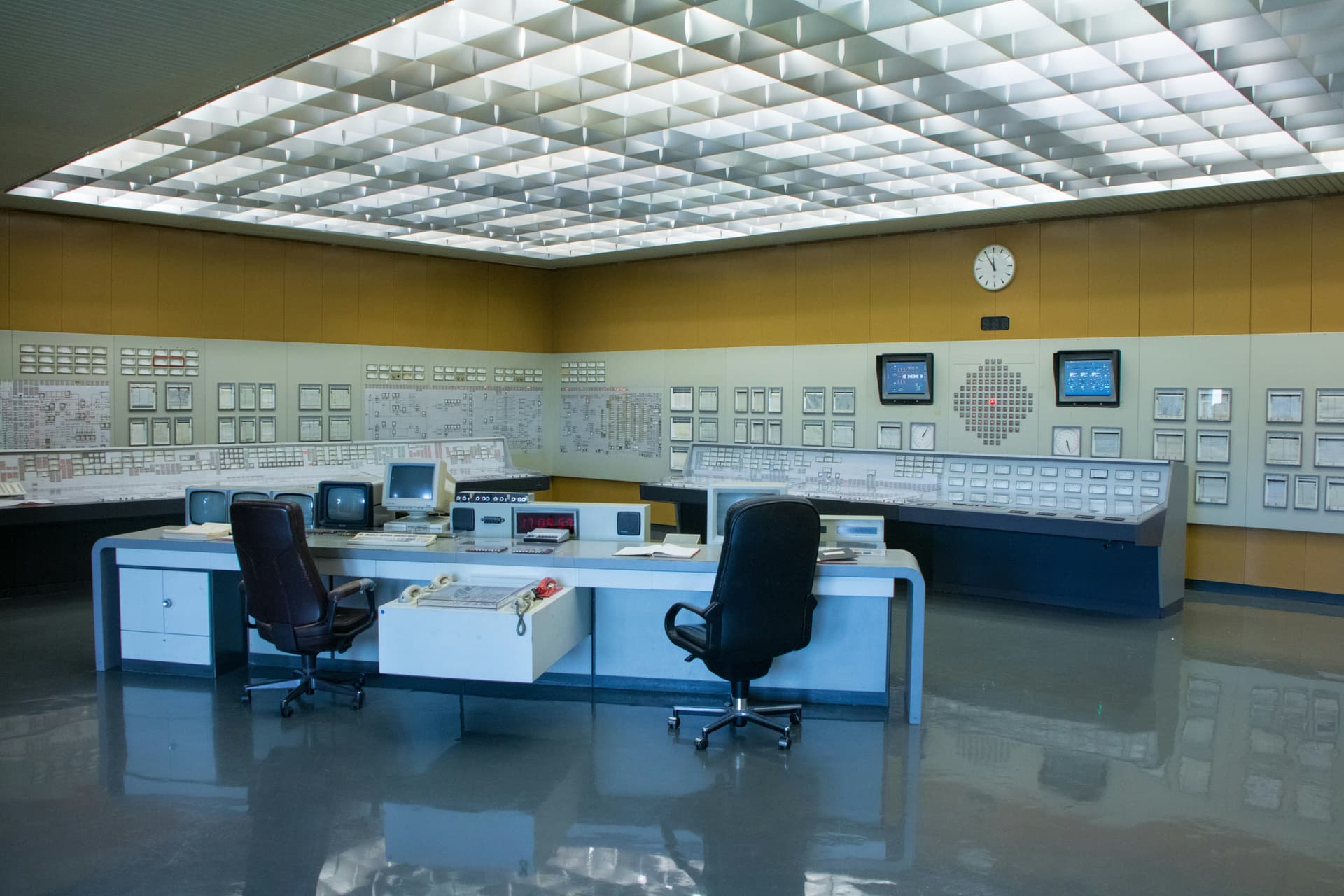
Most U.S. water utilities are at an early stage of AI implementation. The aiWATERS framework research conducted by Virginia Tech's SWIM Center found that utilities face consistent concerns about the "black box nature" of AI, its trustworthiness, and whether the technology is sustainable for their operations long-term[2]. The honest assessment is that the water sector is about five to ten years behind industries like manufacturing and energy when it comes to AI integration.
That finding aligns with what I see in the field. Operators are not opposed to AI. They are cautious, and for good reason. We run critical public health infrastructure. When someone tells us to hand over process control decisions to an algorithm, the first question is: what happens when it is wrong? The second question is: who is responsible?
Some utilities, particularly larger ones like DC Water, Great Lakes Water Authority, and Singapore's PUB, are piloting and deploying AI tools. But the typical utility, especially systems serving fewer than 100,000 people, has not moved beyond awareness.
There are bright spots. AI-controlled chemical dosing is the most common entry point, and several utilities have documented 10-25% reductions in coagulant consumption. Predictive maintenance using vibration analysis and pump performance data is gaining traction. Leak detection powered by machine learning is proving its value in distribution networks. These are not theoretical applications. They are running at full scale at utilities right now.
The water sector is approximately 5-10 years behind manufacturing and energy in AI adoption. Most utilities have not moved beyond awareness, but early adopters are documenting real results: 10-25% chemical cost reductions, condition-based maintenance, and ML-powered leak detection.
What Is Holding Utilities Back from Adopting AI?
Five barriers consistently appear across every survey and framework study published in the past two years: data quality and infrastructure gaps, cost and budget justification challenges, workforce skills and capacity limitations, trust and the "black box" problem, and cybersecurity concerns. These barriers are consistent across utility size, geography, and type.
Data Quality and Infrastructure
AI systems need data to function, and many utilities do not have the sensor infrastructure or data management practices to support them. SCADA systems at smaller utilities may collect data at 15-minute intervals on a handful of parameters. That is not enough for most machine learning applications. Even utilities with extensive sensor networks often struggle with data gaps, sensor drift, and inconsistent formatting across systems that were never designed to talk to each other.
The Environmental Finance Center Network put it plainly: many small utilities lack the sensors, SCADA systems, or digital meters required to generate the data AI needs[3]. Legacy infrastructure is the barrier, and retrofits are not cheap.
Cost and Budget Justification
AI pilot projects can cost anywhere from $50,000 for a targeted chemical dosing optimization to several million dollars for a comprehensive digital twin deployment. For utilities that ranked capital improvement funding as their number one challenge in the 2025 AWWA survey[1], adding an AI line item to the budget is a hard sell. Utility managers need quantified benefits and case studies from comparable systems before they can make the case to their boards or councils.
Workforce Skills and Capacity
Most treatment plant operators were trained in chemistry, hydraulics, and process control, not data science. That is not a criticism. It is a reality that any realistic adoption framework has to address. Adding AI tools without training operators to understand, interpret, and override them creates risk rather than reducing it. The water sector also faces a well-documented workforce shortage. Asking staff who are already stretched thin to learn a new technology category is a significant ask.
Trust and the Black Box Problem
The aiWATERS research specifically identified concerns about trustworthiness and the "black box" nature of AI as primary barriers[2]. When an AI system recommends increasing alum dose by 15%, the operator wants to know why. If the answer is "the neural network says so," that is not good enough for someone responsible for public health compliance. Explainability, where the system can show its reasoning in terms operators understand, is a requirement, not a feature.
Cybersecurity
Cybersecurity concerns jumped from 10th to 8th place in the AWWA 2025 rankings of top issues facing the water sector[4]. Connected systems create attack surfaces. The ransomware attack on Southern Water in the UK, which cost over $5.5 million in recovery, is the kind of incident that makes utility managers cautious about adding more networked systems[4]. Any AI deployment needs cybersecurity planning built in from day one.
The ransomware attack on Southern Water (UK) cost over $5.5 million in recovery. Cybersecurity is not optional for AI deployments in water treatment. Plan for it from day one, not as an afterthought.
What Frameworks Exist to Guide AI Adoption in Water?
The good news is that the water sector is not being asked to figure this out from scratch. Three major frameworks are either complete or in active development, and they are specifically designed for water and wastewater utilities.
WRF Project 5189: Water's AI Framework
The Water Research Foundation's Project 5189 is the biggest and most comprehensive effort. It is a $1.77 million project led by Arcadis in collaboration with Hazen, Virginia Tech's SWIM Center, Bluefield Research, 23 water utilities, and 15 technology providers[5]. The framework provides a structured approach for integrating AI to drive "decision intelligence" across multiple utility functions[6]. It is designed for utilities at different digital maturity levels. The project is scheduled for completion in 2026.
Virginia Tech aiWATERS Framework
The aiWATERS framework (Artificial Intelligence for the Water Sector) was developed through Virginia Tech's SWIM Center with WRF funding[2]. It is built around four pillars: data readiness, governance, transparency, and sustainability. One of the more useful findings is that utilities of similar size tend to have similar AI maturity levels, which means guidance can be somewhat standardized by utility size rather than requiring fully custom assessments for every system.
AWWA, WEF, and WRF GenAI Project
Launched in early 2025, this joint project between the American Water Works Association, the Water Environment Federation, and WRF focuses specifically on generative AI applications in the water sector[7]. Working with utilities from the U.S., South Korea, and the United Kingdom, the project is developing best practices and case studies for GenAI use in water resource resilience, infrastructure management, and public understanding of water value.
DC Water and HRSD: Agentic AI Pilot
On the cutting edge, WRF is also funding the development of an Agentic AI Framework at DC Water and Hampton Roads Sanitation District (HRSD)[8]. This project deploys a platform called Waterways OS with iAsset modules, aiming to demonstrate a scalable approach to "unified intelligence for water operations." If the WRF 5189 framework is the guidebook, this pilot is the test drive.
How Do the Major AI Frameworks Compare?
| Framework | Lead Organization | Focus | Status | Best For |
|---|---|---|---|---|
| WRF Project 5189 | Arcadis / WRF | Comprehensive AI/ML adoption | Completion 2026 | All utility sizes |
| aiWATERS | Virginia Tech SWIM | Readiness assessment + governance | Published | Maturity benchmarking |
| GenAI Project | AWWA / WEF / WRF | Generative AI applications | Active (2025-) | GenAI-specific use cases |
| Agentic AI Pilot | DC Water / HRSD | Autonomous AI operations | Active pilot | Large utilities, cutting edge |
Where Should a Utility Start with AI?

The consistent advice across every framework and case study is the same: do not try to boil the ocean. Pick one high-value use case, pilot it with your actual data, and build from there. The use cases with the strongest track records are chemical dosing optimization (10-25% cost reductions), predictive maintenance via vibration and pump data, energy optimization through time-of-use scheduling, and ML-powered leak detection in distribution networks.
High-Value Entry Points
Chemical dosing optimization. This is the most common AI application in water treatment. Machine learning models analyze real-time turbidity, pH, alkalinity, temperature, and flow data alongside historical performance to recommend coagulant and disinfectant doses. Documented results typically show 10-25% chemical cost reduction. The data inputs are straightforward, and the worst case if the model underperforms is that you revert to manual dosing.
Predictive maintenance. Vibration sensors on pumps, blowers, and motors feed data to ML models that detect early signs of bearing wear, misalignment, or cavitation. This shifts maintenance from fixed schedules (or run-to-fail) to condition-based, reducing both unplanned downtime and unnecessary preventive maintenance.
Energy optimization. AI can schedule energy-intensive operations like pumping and aeration to take advantage of time-of-use electricity pricing. The Trier wastewater plant in Germany used Xylem Vue's AI-driven digital twin to reduce aeration energy consumption by 20%, saving approximately 200,000 kWh per year[9].
Leak detection. Machine learning applied to pressure, flow, and acoustic data in distribution networks can identify and localize leaks with far greater precision than manual monitoring. Yorkshire Water's partnership with Xylem on a smart water network cut visible leaks by 57% and reduced leakage in priority areas by 32%[10].
Chemical dosing optimization is the lowest-risk entry point for AI in water treatment. The data inputs already exist in most SCADA systems, results are measurable within weeks, and the fallback is simply reverting to manual dosing.
Get Your Data House in Order First
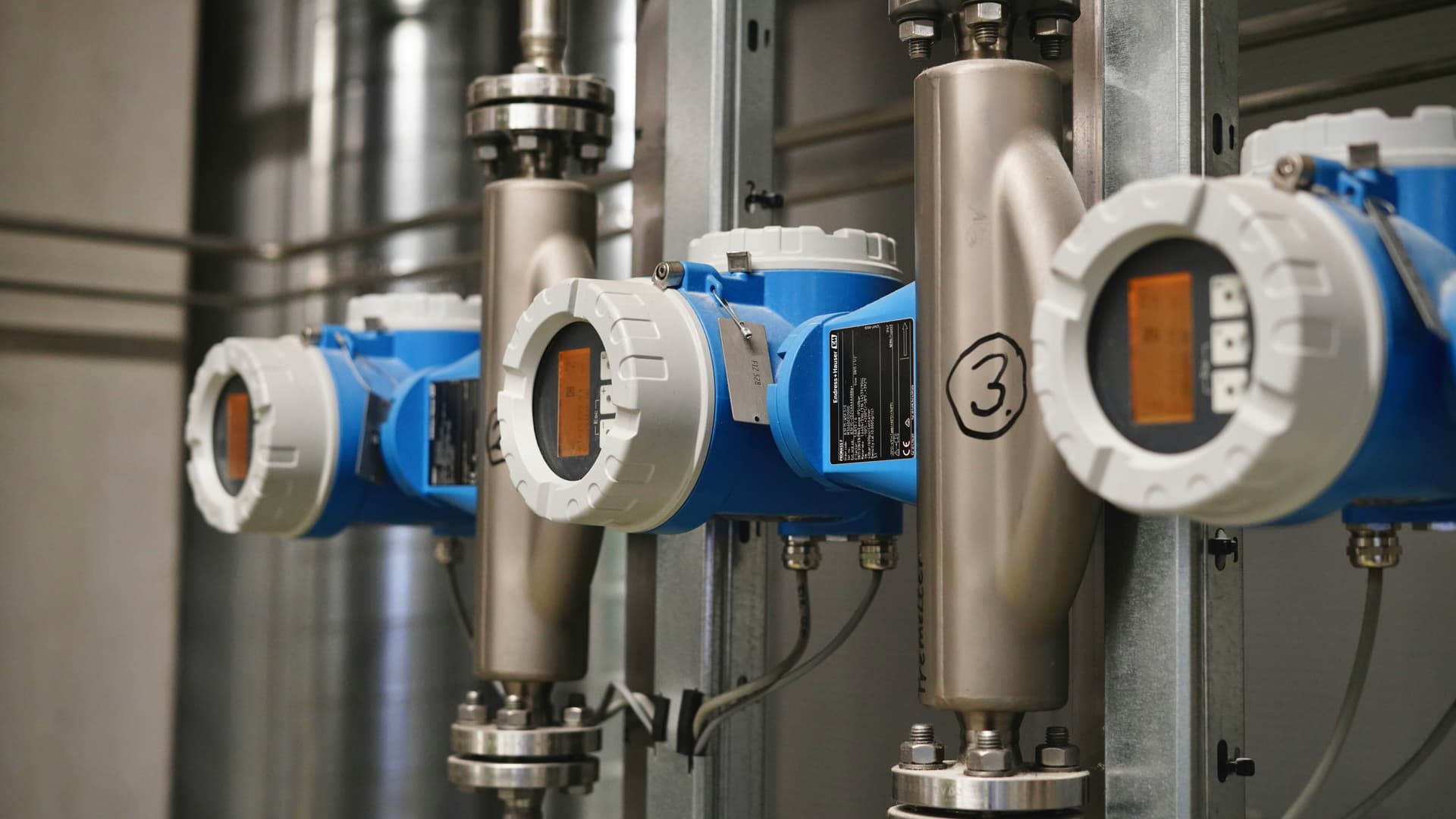
Every framework emphasizes the same prerequisite: you need reliable, consistent data before AI can help you. That means calibrated sensors, validated data pipelines, and a SCADA system that stores data at intervals useful for analysis (ideally 1-5 minutes, not 15). If your data infrastructure has gaps, investing in sensors and data management is a better first step than investing in AI software.
For smaller utilities with limited budgets, low-cost IoT sensor platforms are increasingly viable. A recent study published in Scientific Reports demonstrated an ESP32-based water quality monitoring system costing under $80 that runs machine learning models on-device, classifying water quality events with 99.28% accuracy without needing cloud connectivity[11]. The barrier to entry for data collection is dropping fast.
Start Small, Document Everything
Run a pilot with a defined scope, clear success metrics, and a timeline of three to six months. Document the results thoroughly, because those results become your business case for the next project. The WRF 5189 framework was specifically designed to help utilities make these assessments[5].
Look at available funding. State Revolving Fund programs, WRF research partnerships, and federal resilience grants can offset pilot costs. If your utility qualifies as a disadvantaged community, additional funding programs may be available.
What Does This Mean for Water Treatment Professionals?
I want to be direct about something. AI is not going to replace operators. It is going to change what operators do. The treatment plant of 2030 will still need licensed professionals who understand chemistry, hydraulics, and process control. What it will also need is professionals who can interpret data dashboards, evaluate AI recommendations, and know when to override the algorithm.
If you are an operator or engineer reading this, the most valuable investment you can make right now is building data literacy. That does not mean learning to code. It means understanding what your SCADA data is telling you, being comfortable with trend analysis, and developing a sense for when data looks wrong. Those skills make you more effective today and position you to work alongside AI tools as they arrive at your plant.
For utility managers, the workforce development piece is not optional. AWWA and WEF are already running workshops on upskilling the water workforce for the age of AI. The WRF GenAI project specifically includes workforce preparation as a deliverable[7]. Training your team before deploying AI is not a luxury. It is a prerequisite for successful adoption.
AI will not replace operators. It will change what operators do. The most valuable investment for water treatment professionals right now is building data literacy: understanding SCADA trends, evaluating algorithmic recommendations, and knowing when to override.
Where This Goes from Here
The water sector's approach to AI is cautious, and I think that caution is appropriate. We are responsible for public health, and we should not adopt technology faster than we can validate it. At the same time, the tools and frameworks now exist to start this work responsibly. WRF 5189 will deliver its final framework in 2026. The Virginia Tech aiWATERS research is published and accessible. Pilot programs at DC Water and HRSD will produce real-world performance data.
The trend I am seeing is that utilities who start with a defined pilot, build data infrastructure first, and invest in workforce development are the ones who succeed with AI. The utilities that try to skip those steps, or that wait for the technology to be "perfect," are the ones that fall behind.
I will continue covering AI and data analytics developments on H2oCareerPro.com as the frameworks mature and the case studies come in. If this guide was useful, I would appreciate you sharing it with a colleague. We are all navigating this together.
This article is for educational and informational purposes. Technology capabilities and institutional frameworks are actively evolving. Consult the Water Research Foundation, AWWA, and your state regulatory agency for current guidance. Nothing here constitutes engineering, technology procurement, or regulatory advice.
Frequently Asked Questions
Is AI ready for use in water treatment plants?
AI is being used at full scale for specific applications like chemical dosing optimization, predictive maintenance, and leak detection. However, most utilities are still in early stages of adoption. The technology is ready for targeted pilots, not wholesale process control replacement. Start with a defined use case where the data already exists and the risk of failure is manageable.
How much does an AI pilot project cost for a water utility?
Costs range widely depending on scope. A targeted chemical dosing optimization pilot can start around $50,000, while a comprehensive digital twin deployment can run into the millions. State Revolving Fund programs, WRF research partnerships, and federal resilience grants can offset costs. The WRF 5189 framework is designed to help utilities scope and justify these investments.
Do operators need to learn programming to work with AI?
No. The most important skill for operators is data literacy, not coding. That means understanding what your SCADA data shows, being comfortable with trend analysis, and developing judgment about when data or AI recommendations look wrong. Vendor-provided AI tools are designed to present results through dashboards, not code interfaces.
What is the biggest barrier to AI adoption in water treatment?
Data quality and infrastructure. AI systems need reliable, consistent, high-frequency data to function. Many utilities, especially smaller systems, lack the sensor infrastructure, data management practices, and SCADA capabilities to support machine learning applications. Investing in data infrastructure is the most important prerequisite.
Will AI replace water treatment operators?
No. AI will change what operators do, not eliminate the need for licensed professionals. Treatment plants will still require people who understand chemistry, hydraulics, and process control. AI adds a layer of data-driven decision support, but human oversight, judgment, and the ability to override algorithmic recommendations remain essential for public health protection.
References
- American Water Works Association (2025). "2025 State of the Water Industry Report." Based on survey of 3,575 water professionals. AWWA SOTWI
- Sinha, S. et al. (2024). "aiWATERS: An Artificial Intelligence Framework for the Water Sector." AI in Civil Engineering, Springer. Springer
- Environmental Finance Center Network (2026). "Artificial Intelligence in Small Water Systems: Opportunities and Challenges." EFCN
- Smart Water Magazine (2025). "The Water Industry Embraces Change with Cautious Optimism." Smart Water Magazine
- Arcadis (2023). "Helping the Water Industry Prepare for the Age of AI." WRF Project 5189. Arcadis
- Water Research Foundation (2025). "Quantifying the Impact of Artificial Intelligence/Machine Learning-Based Approaches to Utility Performance." WRF Webcast
- American Water Works Association / Water Environment Federation / Water Research Foundation (2025). "The Role of Generative AI (GenAI) for the Global Water Sector." WRF GenAI Project
- Water Research Foundation (2025). "Development of Agentic AI Framework for DC Water and HRSD." WRF Agentic AI
- SWAN Forum (2026). "Optimising Wastewater Treatment with a Digital Twin in Germany." Stadtwerke Trier Case Study. SWAN Forum
- Xylem (2025). "5 Ways Artificial Intelligence Is Set to Transform Water Management." Yorkshire Water case study. Xylem
- Scientific Reports (2026). "An Intelligent, Low-Cost Water Quality Monitoring System with On-Device Machine Learning and Cloud Integration." Nature. Nature Scientific Reports